The problem.
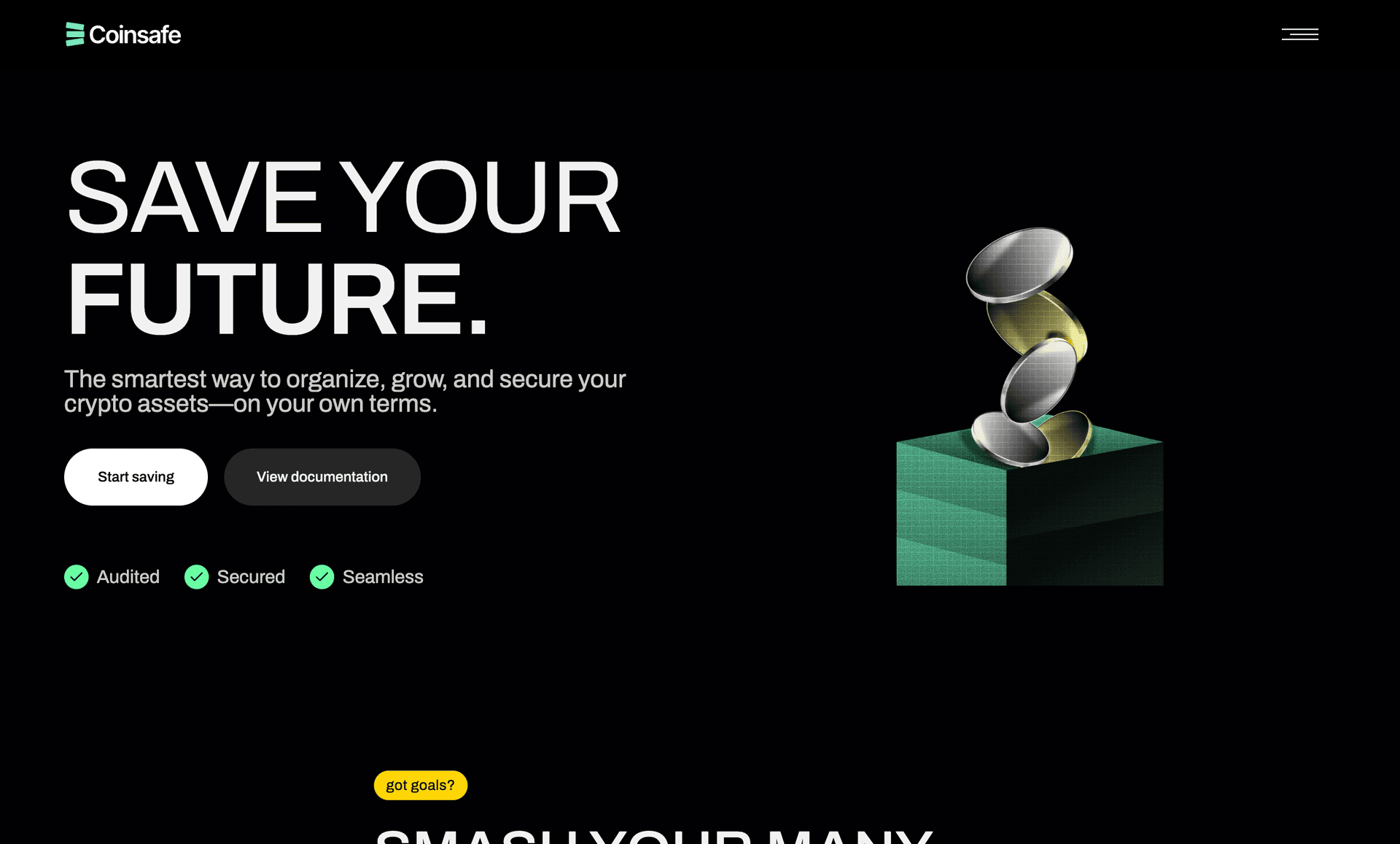
DeFi savings platforms usually look and feel like confusing protocol dashboards. There are few goal-setting or discipline mechanisms, and withdrawal lock rules are buried in docs. On top of that, crypto wallet onboarding is the biggest drop-off point: asking someone who just wants to save money to install a browser extension, write down 12 seed words, and buy gas tokens loses them immediately.
The approach.
The smart contracts team designed an isolated, vault-centric protocol where time-locks and savings strategies are strictly enforced on-chain. My job was owning the entire product layer on top: the responsive web app, the onboarding flow, and every bridge connecting user interfaces to backend APIs and the blockchain.
The process.
Implemented an account abstraction pipeline with thirdweb: enabled Google, email, and biometric passkey onboarding with sponsored gas, allowing non-crypto users to start saving without knowing what a seed phrase is.
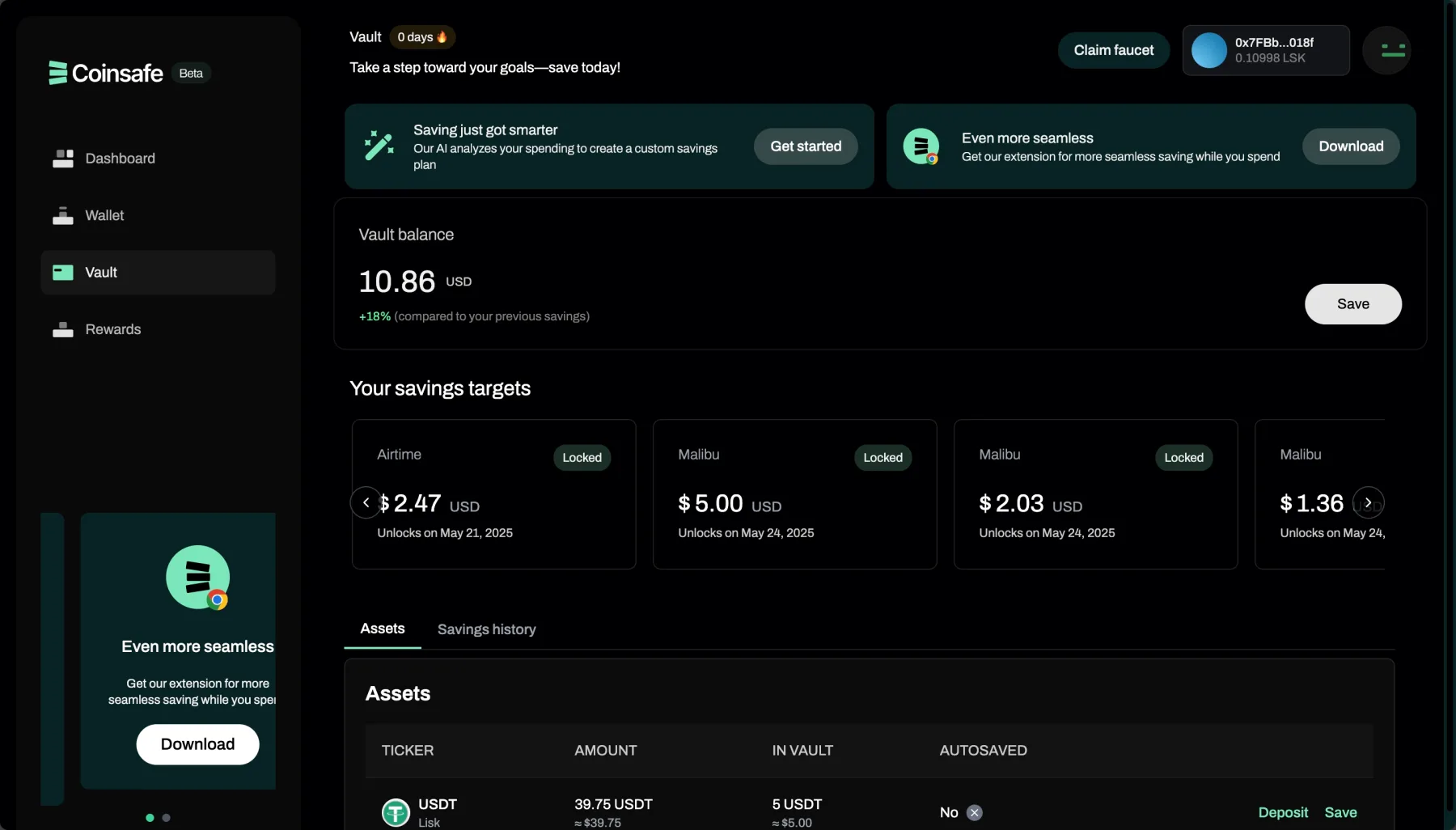
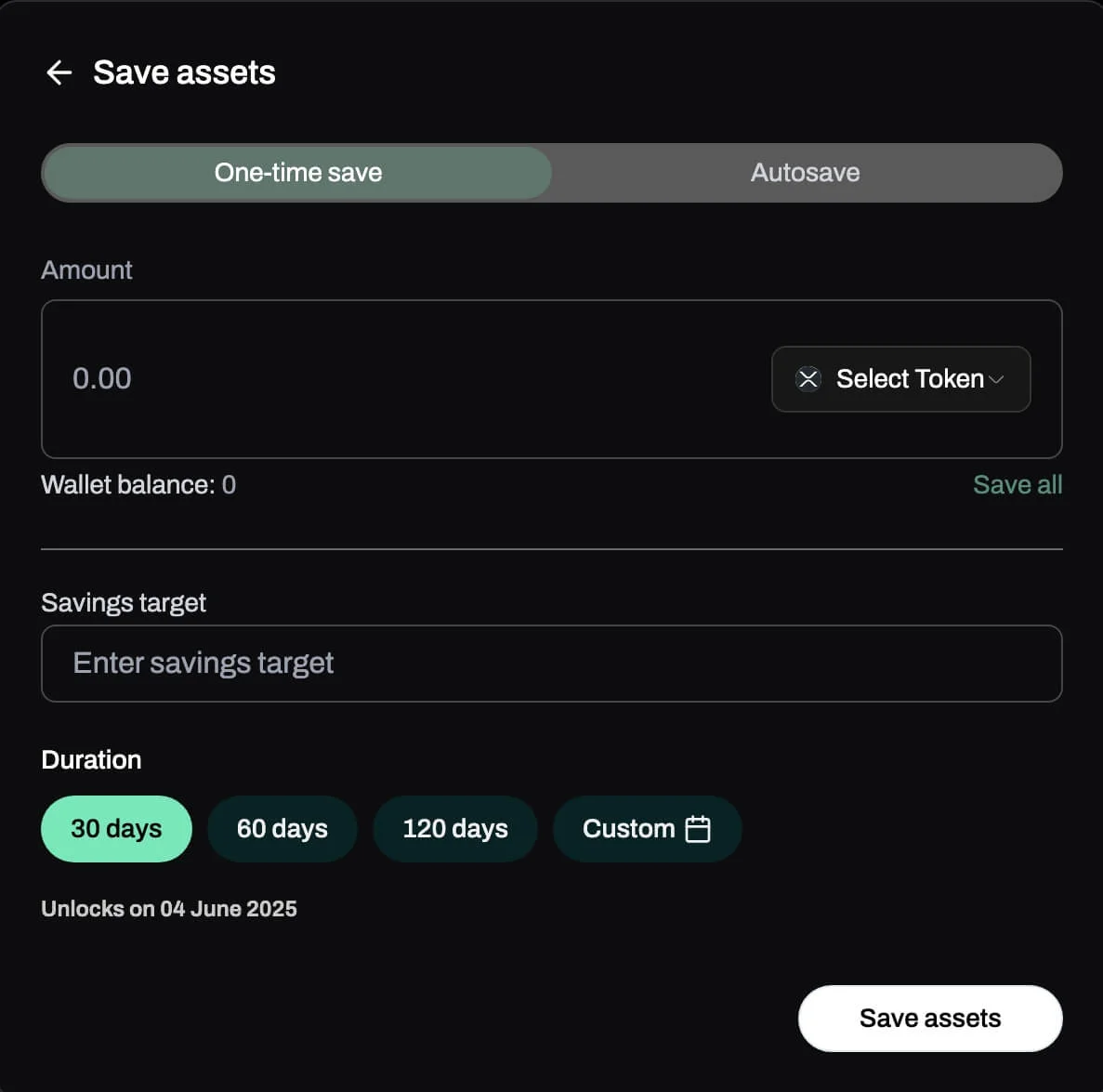
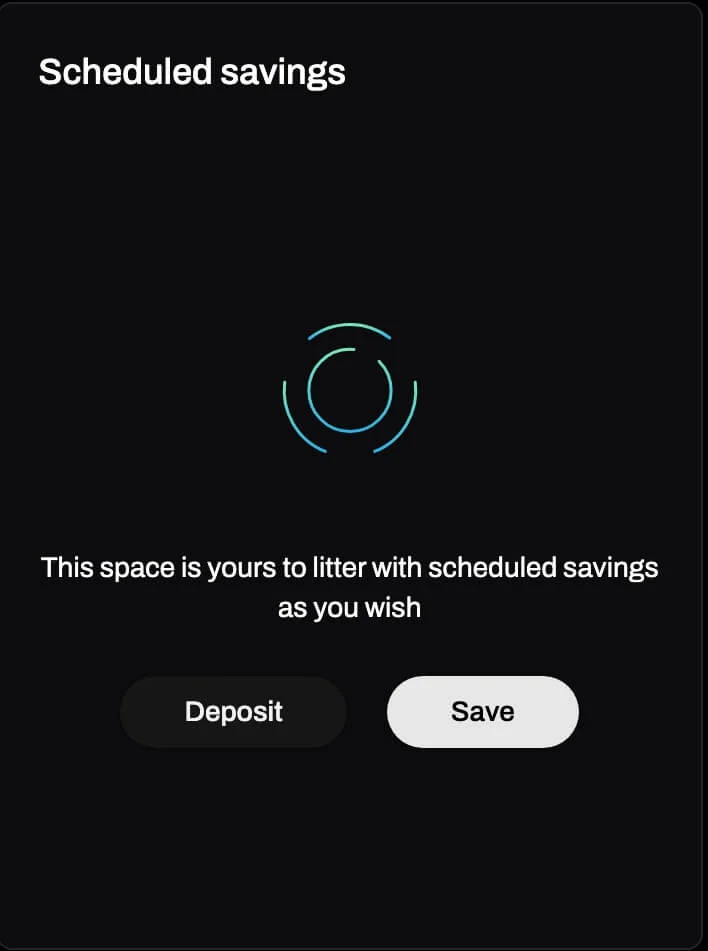
Engineered the frontend and contract interactions across 50+ screens: target safes, emergency lockboxes, automated recurring deposits, and reward claims in a progressive web app (PWA).
Built a reactive event-listening pipeline to keep UI state synchronized with blockchain confirmations. Mapped over ten smart contract transaction types using optimistic updates so the UI never stalled during block latency.
Conducted close contract reviews from the integration boundary, catching and reporting protocol edge-cases and transaction reversion risks before deployment.
The screens.
The outcome.
“Integration work lives on the seam between three systems: the interface, the backend, and the chain—and bugs live on that seam. Reading contracts closely enough to flag problems made me a better frontend engineer, and it made me want to understand what sits underneath the contracts: storage, consensus, and the machinery that makes the guarantees real.”